The 3am Thoughts
Budgets
Hello Clackamas,
I want to talk about something some people find boring, but I enjoy it because of the mystery within. Budgets.
Just a few years ago, I was working for a company that had a budget problem. At first, I was not given the books, just a project to manage. Over time, I was asked to lead that side of the warehouse, which meant I became responsible not only for the work itself, but also for the labor and the numbers behind it.
Something did not sit right. My team was putting in more labor than we were getting paid for, and that is always a red flag. So I started digging. The contract for the job originally paid $1,200 per job, with about $500 in labor over three days. But somewhere along the way, the job was being quoted at $450 total, less than half of what it should have been.
I raised the issue and waited for a response, but I also went back and looked deeper. What I found was that at least 15 cycles of that same mistake had already gone out the door. Thousands of dollars were lost, not because anyone was trying to do something wrong, but because nobody stopped to question the numbers once they became familiar. That is how problems grow.
Over the next two years, I was handed more projects to review. I sat down with owners, walked through supply chains, questioned pricing, and helped correct inefficiencies. In total, we recovered hundreds of thousands of dollars. That did not come from cutting people or reducing services. It came from paying attention and being willing to ask better questions.
That experience stuck with me because budgets are not just spreadsheets. They are decisions. Too often, those decisions get repeated year after year without anyone asking if they still make sense.
Clackamas County operates with a budget of about $2 billion, but a large portion of that money is already locked in or passed through from state and federal sources. The part we truly control is much smaller, which makes every dollar matter even more. Roughly speaking, about a third goes to health and housing, about a third goes to public safety, and the rest has to cover everything else.
So when we talk about costs going up, services feeling stretched, or new taxes being proposed, we should also be asking a simple question. Are we looking closely enough at what we already have?
I am not running to point fingers. I am running because I have seen what happens when someone is willing to slow down, ask questions, and take responsibility for the numbers in front of them. Sometimes the biggest improvements do not come from adding more. They come from finally taking a closer look.
R.W. “Remy” Smith
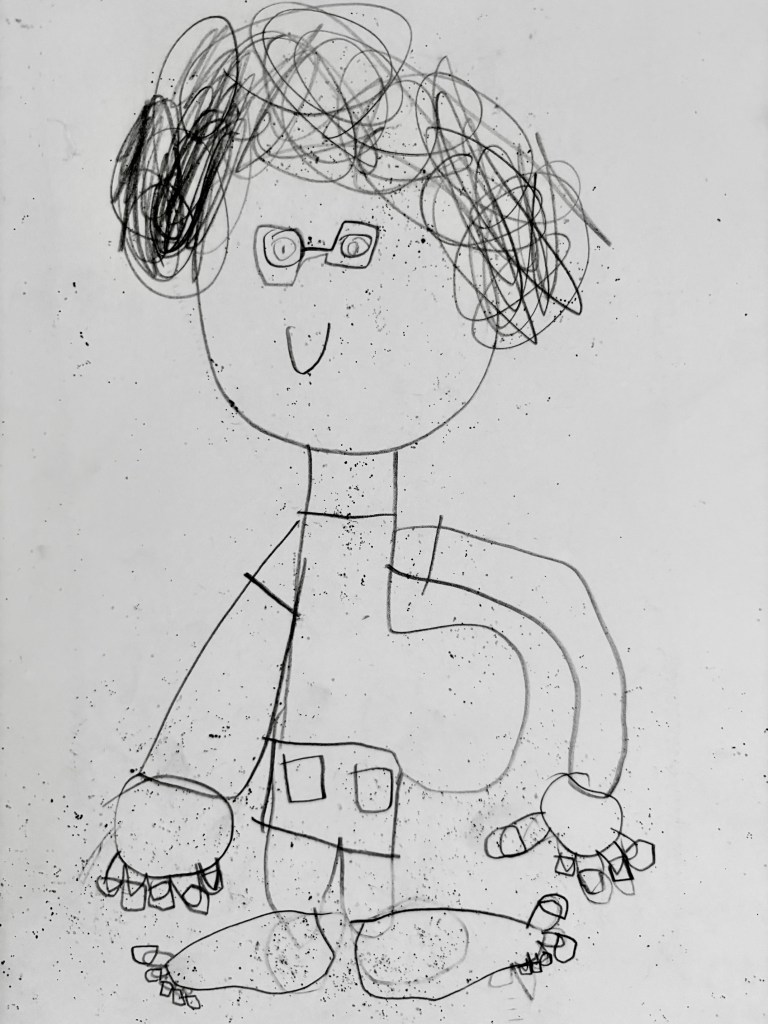
Call me Remy, and the Grandchildren to come~
Last night I finished my voter’s pamphlet submission. I have never been very good at peacocking my life so someone can read a short blurb and decide whether they want to vote for me. Trying to compress a lifetime into a few polished sentences feels strange to me.
So today I slowed down and let my mind wander a little. There is an old saying that one day you put your children down and never pick them back up again. That thought sent me down a strange path thinking about all the other things we do for the last time without realizing it. The last time you try something new, the last time you eat your favorite food, the last time you stand up from a chair. And the one that lingers in my mind is the day a person stops doing something different. Death does not always arrive all at once. Sometimes it seeps in slowly through the small compromises we make with ourselves.
I’m running for County Commissioner. Shh, don’t tell. Even if sometimes I want to shout it from the rooftops, I still just want to be me. The guy who talks about crows and rivers, the one who carries a few dark memories but somehow learned to smile at them with a little gallows humor. Those scars shape a life. One thing that surprised me during this campaign is how many of the other people running seemed surprised when I called them just to talk. Not politics, just talk. I ended up having dinners, drinks, and coffee meetings offers with people who technically are my competition. We laughed about the insanity of running for office and talked about why any of us would put ourselves through it.
Jim Bernard and Sonya Fischer are two people I spoke with who struck me as genuinely kind and thoughtful. They care about this county. The people I’m actually running against in this race, Brian O’Neill, Pete Wease, Robert Kukish, Jeannette Christina Warren, and Bill Osburn, also struck me as decent people. Funny at times too. Each of them has their own reasons for stepping forward and from what I can tell they want what they think is best for Clackamas County. That might sound strange in a political world that likes to turn everything into a fight, but I think it says something good about our community.
Today my daughter took one of my campaign cards and tucked it into a scrapbook. She said she wanted to keep it so one day she could show her babies and tell them about my life. For just a moment I could see that moment too. I found myself standing in several places at once and it was a strange experience all by itself as I watched her tell stories about her father…
Sometimes a breath gets caught halfway out and you try to hold the moment, but time rushes back in like water filling the shore line and time jumps and you’re looking at a child’s face imagining grandchildren will be worthy of the story she’ll tell?… So what should we do with the time we have? Yell at the sky, dance in the darkness when the moon hides behind the clouds, spend time with the people who make you whole… breathe.
I do not want to lose myself to the idea that I am a politician now. What I value most is when people feel comfortable enough to stop me and talk. That has always been my bread and butter. If you need something, or just want to talk, reach out. Maybe something good can come from that. R. W. Smith… Call me Remy~
A Pig Named Espy~ And late nights
Years ago my stepfather (Malcolm) owned a small piece of land with a tiny orchard: two apple trees, a pear, and a peach. The real problem was that we could never eat all the apples before winter. At a family meeting I offered a very self-serving solution. You see, I had wanted a pig for years. I must have asked dozens of times over three years, and when the apple problem came up I saw my chance. “We could get a pig and feed it apples.” I think he saw through this but he told me I had to step up.
There was already a hay field and space for a large garden where I was making a little money on the side. We had chicken coops and two small outbuildings that had once been used for pigs more than a decade earlier. I took it upon myself to fix them up, checking the hoses to make sure water could reach them, patching boards, and cleaning out old debris. Then reality hit. All this work was fine, but we had no money.
So I figured out that if I used the money I earned baling hay and working at the superintendent’s school farm in town, I could afford a pig of my very own. Malcolm, my stepfather, finally agreed. All it would cost him was about fifteen dollars a month in corn. Every morning in the summer I would wake at 5 am and ride into town and work until 2 pm. Three days a week and Friday and the weekend I would bail hay all summer long. In early October of 1992 I bought a registered pig from Gary Pollard for $125 and named her Espy.
Espy and I were a hell of a team. She opened doors for me that I didn’t even know existed. Gary Pollard, Superintendent of our school, told me I had a way with animals and gave me a job for four years at his farm… Raising animals taught me responsibility, patience, and the simple truth that nothing on a farm goes to waste. Her manure fed the garden, and her offspring helped build a cycle of life that turned that garden into a real money maker.
Somewhere in the spring of ’99 Espy died. The 90s were not my decade to be blunt. In those years I lost my father, my brother, my grandmother, and my grandfather… and then I lost my pig. At the time it felt Espy was more than livestock or just a pig. She was family.
One night she stepped on one of her babies and tore the skin badly. I remember sitting there with a needle and thread, carefully stitching the tear and keeping everything where it belonged. Later I found Espy standing at the back door of the house waiting for me. She had escaped her pen looking for her baby. I patted her broad five-hundred-pound side and told her to get back to her pen.
The baby lived, and that piglet grew into a strong sow that later birthed an entire generation of pigs. I was told many of them lived long lives and never even faced the block.
Looking back now I realize how lost I was during those years. So much death, so much loss. Life has a way of taking things from you until it feels like nothing is left. If I had let that sadness settle into me it might have taken root for good, but youth, responsibility, and the lessons of a pig named Espy kept me moving forward.
Maybe that is the point of getting lost in life… so we can learn how to find our way back. When the weight of life becomes too heavy we hide inside the small realities we try to capture in writing or photographs, yet something gets lost there. You cannot smell fresh grass through a screen, feel the warmth of a spring orchard in bloom, or hear the quiet breathing of an animal that trusts you.
The world keeps moving anyway, continuing its endless dance of birth, decay, and renewal. Perhaps I am old enough now to see that reflections bring a kind of comfort that modern life rarely shows.
Today I hear my youngest struggling with draining ears, and I hear the worry in my wife’s voice because she remembers those same pains from her own childhood. In moments like that I realize how strange it is that life continues forward generation after generation. I can explain my relationship with nature and I can explain hard work, but how do you explain mourning a pig?
Maybe you don’t. Maybe you simply say thank you for the lessons that carried you this far.
Because without the orchard, the hay field, the garden, and a pig named Espy, I might never have become the man I am today… a father, a little sleep-deprived, nodding off at the keyboard while writing this.
Thanks, Espy. The happy memories are stronger than the sad endings. Oh and those ears drained fine~ R.W. Smith (Remy)
